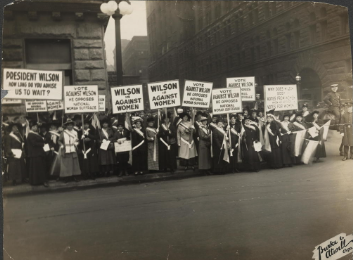

Some court cases show that civil rights, such as free speech, should be used cautiously. On school property, it may be restricted due to disruption of the educational process; however, outside of these restrictions, students and children are given complete free speech.
At an Olympic Torch Relay in town, Joseph Frederick held a sign stating “Bong Hits for Jesus.” He was then suspended from school for ten days after the principal claimed that people may be offended.
This event was a school-supervised activity and not on school grounds. Frederick claimed that his First Amendment rights were violated by his freedom of speech being infringed upon, then attempted to sue the school.
This court case, Morse v Frederick, ruled in favor of the school, Morse. The Supreme Court ruled that it was completely constitutional to stop Frederick from holding the sign.
Our voices are the most powerful thing we have and to take that away, in this case, will make our voices quiet and unheard.
More recent cases like Mahanoy v. B.L. gave students the right to not be punished for off-campus activities. Court cases define whether our civil rights as students are given or taken.
For now, our first amendment rights are restricted at school. However, they cannot be punishable for an off-campus statement.